Immersive exhibit makes North American debut at Cal. Academy
Neal Wong • July 2026 Issue • Published in The Richmond Review
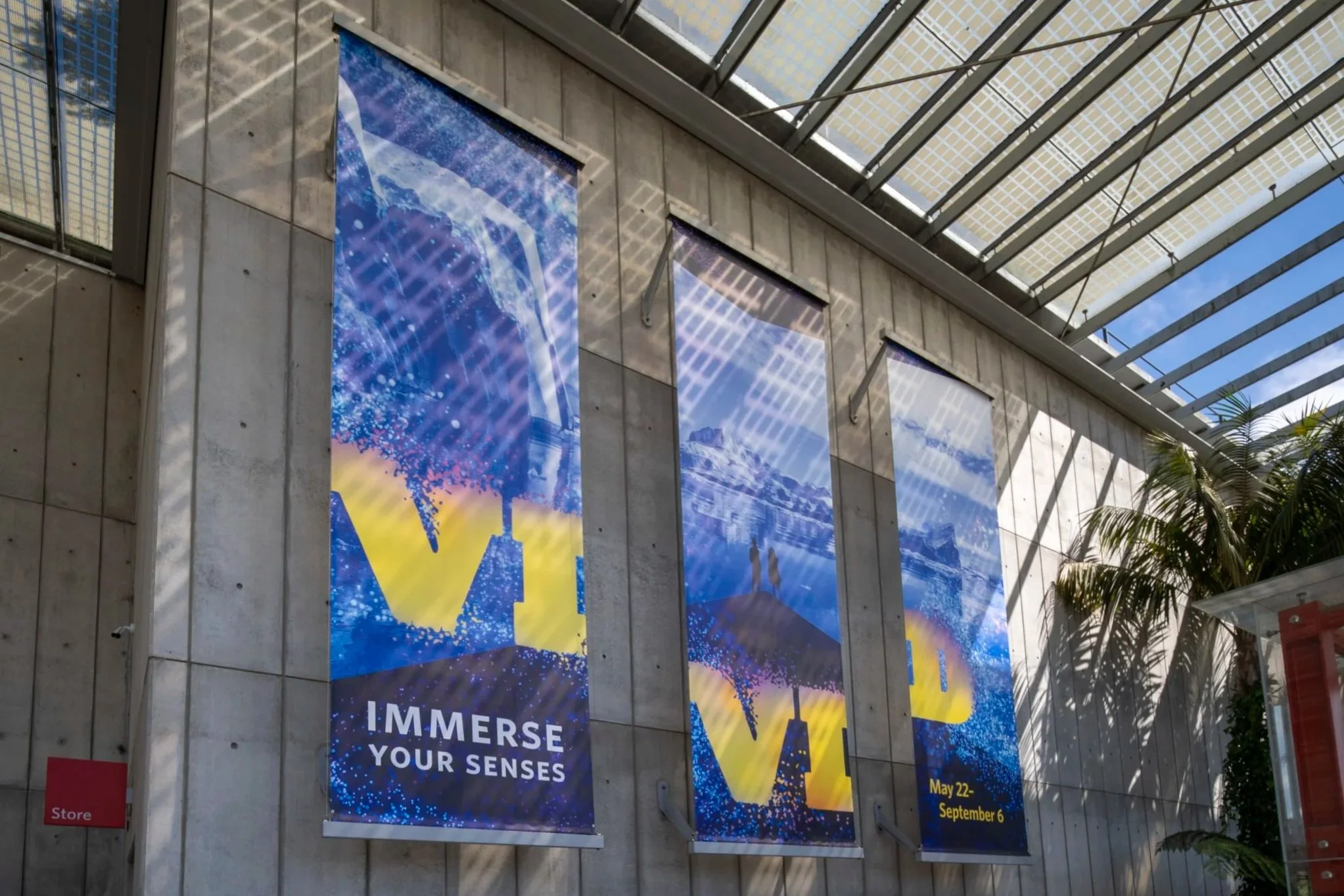
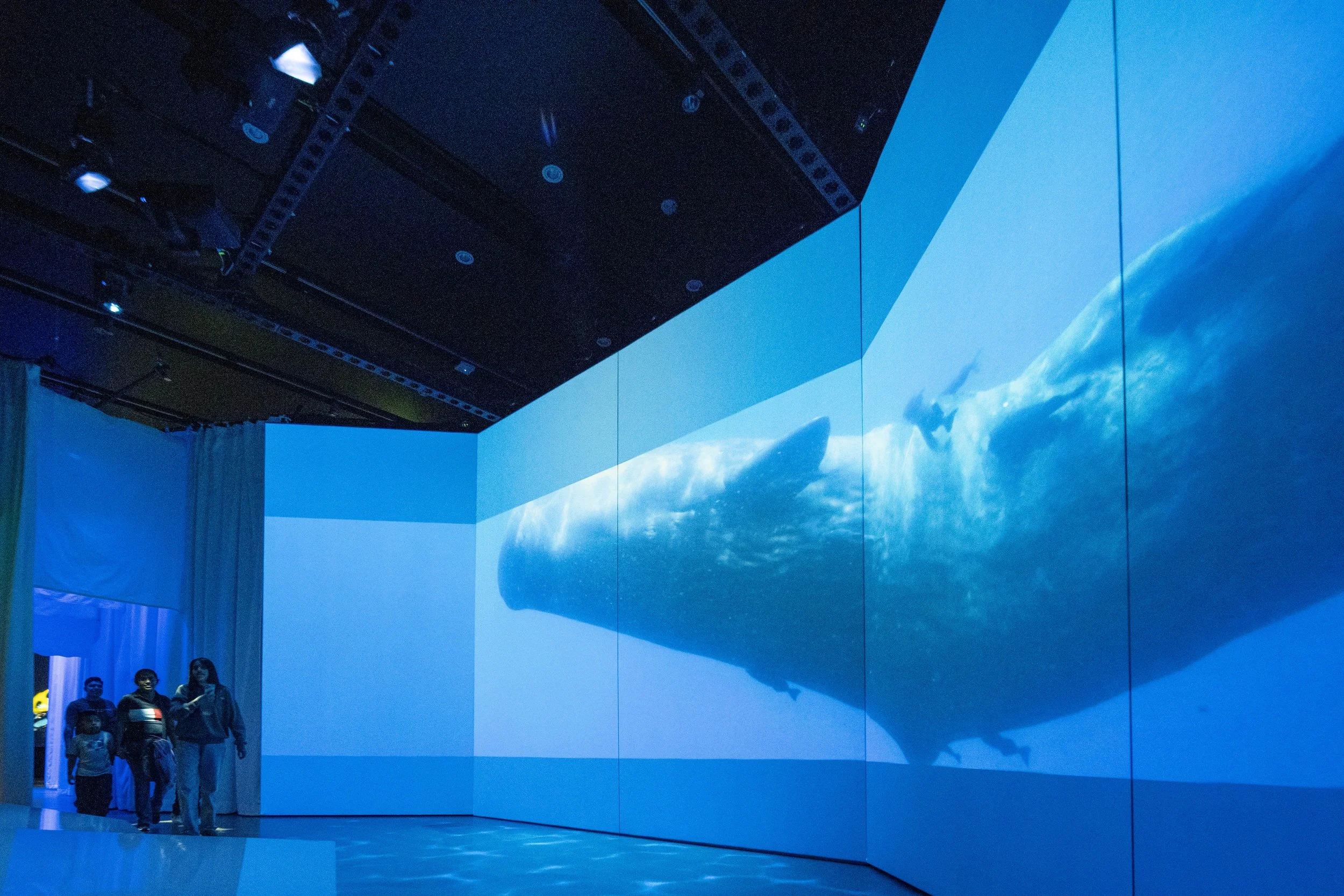
Through high-resolution video projection, spatial audio and nature-inspired scents, a new exhibit at the California Academy of Sciences hopes to make people feel transported to destinations around the world.
“Vivid: Immerse Your Senses,” which runs through Sept. 6, marks the first North American showing of the production from the French company Sensory Odyssey Studio, which has toured the experience through museums in Europe and Asia.
Aaron Smith, senior director of exhibitions, said he first encountered the production through an existing partnership with Supply + Demand, the Canadian company licensing the content for its North American tour.
“We wanted to work with Sensory Odyssey on this particular show because they really did an amazing job of capturing some magical footage,” Smith said. “We were inspired by the installations that they’ve done in other places around the world.”
Smith said visitors have been staying longer than expected, sitting down and settling in.
“It’s almost become like a place to just really take a deep breath and sit down and contemplate or meditate and just relax,” Smith said. “We want people to[…] spend as long as they would like and appreciate each of the sections of the exhibit.”
Smith described his own reaction when he first saw the completed installation about a week before the public opening.
“Looking at the high-resolution imagery of insects in the insect chamber, the prairie chamber, was really mesmerizing because with your bare eye, you can’t see that level of detail,” Smith said. “For example, a honey bee collecting pollen — you can really see all the grains of pollen, and you can see some of the grains of pollen kind of floating away in the wind. It’s just magical.”
Gwenael Allan, CEO and founder of Sensory Odyssey, said the project grew from a personal interest in neuroscience and the science of scent. The insight that stood out to him was that smell triggers emotion more powerfully than any other sense.
“Through scent, you can create emotions and memories far quicker than through any other sensory stimulation,” Allan said. “As a theatrical producer with the intention of trying to make people connect to nature, I thought that using scent as a language to generate emotions — to make people feel connected to nature through their body sensations — would be a way to make an immersive experience much more powerful than if it was just images and sounds.”
Allan said the production cost more than 4 million euros to create, with teams of five to 20 specialists dispatched to nine locations worldwide — including the Amazon, the Arctic and the coast of Mauritius for sperm whale footage — all filmed in up to 8K resolution during the COVID-19 pandemic. More than 350 people collaborated on the project.
The scents were designed to match the visuals, but also to maximize emotional impact. They were created in partnership with IFF, the world’s leading fragrance company.
“The scent of Earth — you would think there would be one scent of Earth, but in the same way that there are many tones of brown, there are hundreds of tones of Earth,” Allan said. “Finding that right fine-tuning until we find the one that really fits — that is where art needs science.”
Due to space constraints, the Academy’s version of the exhibit runs at roughly one-third the size of the original installation in the Muséum national d’Histoire naturelle in Paris. Smith said that as a result, the team selected experiences that would resonate with Academy audiences while offering the most geographic diversity.
“From the Arctic to underground to the rainforest to deep caves, where there’s bats navigating them, to prairie meadows — we wanted them to be kind of chapters in a story that people could both relate to, but also would be really unique and intriguing to them,” Smith said. “If you stay long enough in a couple of the chambers, you’ll see a few different stories one after the other.”
Amber Cochran and her husband entered the exhibit unsure of what they would see or hear. They said they spent part of their 20 minutes in the exhibit mesmerized by the videos of snails, spiders and insects.
“The most interesting thing was to see their anatomy, you know, how they’re constructed from close up, the noises they make that we aren’t even aware of,” Cochran said. “It’s fascinating, absolutely fascinating like nothing I’ve ever seen.”
Alba Espinoza, who was visiting from Sacramento, said her experience was a meditative 15 minutes.
“There was a lot of like rainforest noise, ocean sounds, iceberg, so a lot of nature sounds,” Espinoza said. “It just felt calm and relaxing and soothing.”
Espinoza walked in expecting it to be dim but not really immersive. She ended up staying inside longer than she had expected.
“It was a really, really amazing exhibit,” Espinoza said. “I just liked being able to kind of just feel like you’re in the ground or in the forest or whatever each theme was like — you can feel that you’re in it.”
Cadance Hinkle Allinson, another visitor, echoed that sentiment.
“The sound plus the visual elements and the things that you walk through and touch — it really tied all the senses together,” Hinkle Allinson said.
The Academy also created an entirely original Sensory Gallery focused on animals’ experiences, with specimens and animal avatars.
“That was cool too, to hear what the whales hear, or like the bees or what the sloths see,” Espinoza said.
The portion was designed to bridge the immersive experience with scientific education, according to Smith.
“We felt that after having people use their senses, it would be good to flip the card and talk about how animals sense the world,” Smith said. “This was also an area where we could really rely on the Academy’s scientific expertise.”
The animal avatars currently deliver pre-recorded messages, but Smith said an A.I.-generated conversational version is weeks away.
“There’s just some finishing touches to take care of before we launch it to the public,” Smith said.
Allan said the exhibit’s ultimate goal is to make visitors feel a sense of responsibility in nature before they leave.
“We believe that the best way to connect to nature is not through our mind and understanding of it, but through our body — it has to be a physical experience,” Allan said. “We do not replace nature. We just stage it in a way that changes our perception of it, enhances our feeling of belonging. So that when you finish the exhibition, you are more curious to read about and learn about nature — but also to care about it.”
The California Academy of Sciences is open from 9:30 a.m. to 5 p.m. on Mondays to Saturdays. On Sundays, the hours are 11 a.m. to 5 p.m. Vivid: Immerse Your Senses is located in the museum’s Forum Gallery on the second floor and runs through Sept. 6. Admission price varies by age of visitor and time of visit. EBT cardholders can get admission for $5. Ages two and under are free.